
5 Essential Tips for Selecting a Truly Timeless Engagement Ring
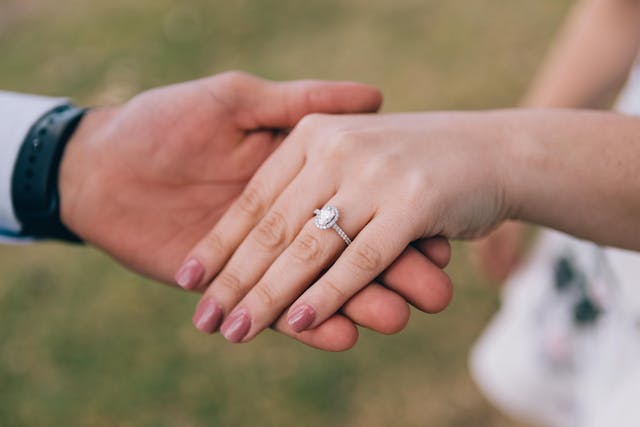
An engagement ring is one of the few purchases you make with the explicit expectation it will outlast you. That’s a different kind of decision than most, and it deserves a different kind of thinking.
Most purchases age quietly – a sofa replaced, a car traded in, a watch handed down without ceremony. An engagement ring is different. It will be worn through decades of ordinary days and extraordinary ones, examined under the light of new kitchens and old age, and eventually passed to someone who never chose it but will treasure it all the same. Getting it right matters in a way that’s worth slowing down for.
Cut And Shape Above Everything Else
Start with the stone, and start with its cut. The round brilliant has held its position not because of marketing but because the geometry works – 58 facets engineered to return light through the table with maximum efficiency. It has outlasted every trend that tried to displace it, and there is no serious sign of that changing. Emerald cuts and ovals have their appeal, but they’re more sensitive to colour and clarity variations, which means you’re paying for grades that actually show.
Within any shape, prioritise cut quality over carat weight. A 1.0ct diamond with an Excellent cut will outperform a 1.3ct stone with a Good cut in terms of visible fire. Carat is a weight measurement. Brilliance is a geometry outcome. Don’t trade one for the other.
Metal Is A Structural Decision, Not An Aesthetic One
In a shop window, white gold looks much the same as platinum. Fast forward ten years of daily wear and a clear distinction has appeared. White gold is actually an alloy, often rhodium plated for colour, and will need replating every couple of years to keep that whiter-than-white look. Platinum doesn’t lose metal mass when abraded (scratched) so just displaces – which means more of the material stays in the ring. It will patina beautifully over time, and this can always be polished out later if preferred.
If warmth is the preference, 18k yellow gold is considerably less base metal than 9k in the mix. Which also makes for a lesser chance of skin reaction and equal stability over time in terms of colour.
Band Width Is A Structural Issue, Not A Style Preference
The super skinny bands you’re seeing all over social media right now – sometimes less than a millimeter wide – are a maintenance problem waiting to happen. A band that thin bends. Over years of wear, the metal fatigues, and the setting becomes insecure. A width between 1.8mm and 2.5mm is in the sweet spot of strong enough, yet still elegant. This isn’t a compromise on aesthetics. A well-proportioned, medium-width band will look better at 40 years than a whisper-thin one will at five.
The shank profile matters too. A slightly domed or comfort-fit interior will reduce daily wear on both the metal and the wearer. It’s the kind of detail most buyers don’t notice in the shop, but appreciate every day.
Setting Style And Stone Security
The main reason prong settings are still so popular is because they allow the most light to enter the stone, making it sparkle. Prong settings are also the easiest to clean because they allow for the most direct access to the diamond. You can easily see if there are any loose prongs, which are more likely to wear out and need maintenance before the rest of the ring. That’s why a six-prong Tiffany-style solitaire from 1886 is still standing today; redundancy matters – if one prong catches or wears thin, five remain.
A four-prong setting is also an excellent option. It has a more streamlined silhouette and offers less room for damage (meaning it’s less likely to accidentally get bumped). However, for some people, it offers a little bit less tolerance if damage throughout the years is a concern. You should also consider how heavy wear may push the prongs into your hand while helping to lift the diamond up.
Another route to consider is a bezel setting, where the metal completely surrounds the diamond along its edge. For active lifestyles, this offers the best protection and is the favored style of many professional jewelers. The stone is far less likely to become loose, but you give up a bit of light entering from the sides. Neither option is wrong – the question is which trade-off suits a lifetime of actual wearing conditions.
Craftsmanship And The Custom Advantage
Mass-produced rings are made to a price point, and structural compromises are invisible until they’re not. Working with a specialist – a Joondalup jewellery designer shop like Jewellery Design Studio, for instance – means the ring is built around your specifications, not pulled from a tray of near-identical options. A custom designer can adjust prong angles, shank thickness, and setting depth in ways that improve both security and daily comfort. They can also incorporate a personal detail – a birthstone accent, a specific engraving, a metal choice tied to family heritage – without making the ring look like a personalised product. Subtle is the word.
Certification matters here too. A GIA or IGI certificate isn’t just paperwork – it’s the only way to verify what you’re actually buying, and it’s essential for insurance and future valuation. Any reputable jeweller will supply one without hesitation.
Choose For The Long Wear, Not The Proposal Photo
A ring is photographed once. Not every day for decades. These are two very different decisions and the first one shouldn’t dominate the second. Classic proportions, proven metals, verified stones, and skilled construction are what make a ring look as considered in fifty years as it does on the day it’s given.
The best engagement rings share something that’s difficult to name in a showroom. They don’t announce themselves. They don’t chase attention. They simply belong – on the hand, in the room, in the life being built around them.
That’s the standard worth holding. Not the one set by trends, or budgets, or what photographs well in low light. The one set by time.