
Why Consistency Between Home and Preschool Is Key to Healthy Behavior
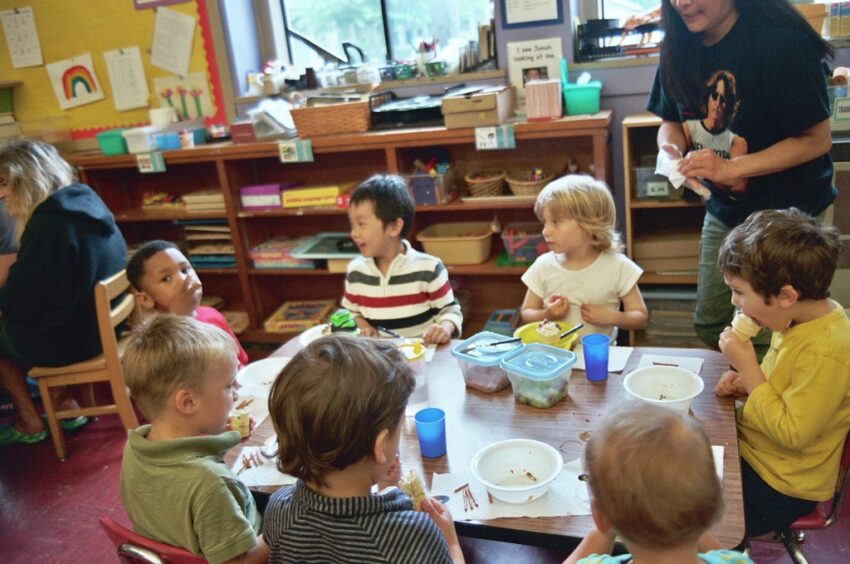
Children do not categorize as much as grown-ups. If the rules in the house are different from the rules in preschool, children do not think that different environments have different rules – they think everything is up for discussion. That one misinterpretation is the foundation of much of the “testing” that wears out parents.
What looks like defiance is often something much simpler: a child doing exactly what their brain is designed to do, which is search for the pattern. When they can’t find one, they keep searching – louder, longer, and at increasingly inconvenient moments.
The Cognitive Cost Of Mixed Messages
Young children are still developing executive function – these skills allow them to manage their impulses, follow steps, and keep hold of a set of instructions in their short-term memory. At the ages of three and four, these systems are incredibly fragile. They don’t get built through exposure to stressed-out or unpredictable environments but through repeated experiences in a stable environment.
When a preschool tells a three-year-old “we use our words when we’re angry,” but at home, the three-year-old witnesses the adults in their life responding to frustration by shutting down or yelling, they’re not learning to be flexible, they’re experiencing low-grade cognitive dissonance, which is the mental equivalent of trying to drive a car with the handbrake engaged.
All their mental energy gets tied up in simply coping. This leads to trouble forming relationships, a sense of anxiety that they can’t put their finger on, and struggling to do things they’re going to need to do in the future, like regulate eating, drinking and maintain good mental health. For true cognitive flexibility, the child needs as much convergence at all the different places in their life as possible.
Building A Unified Front With Your Child’s Educators
This is where the partnership model matters. The relationship between parents and early childhood educators works best when it’s genuinely two-directional. Teachers see behavior you don’t, and you see behavior they don’t. Neither picture is complete on its own.
A good starting point is a monthly check-in – not a formal meeting, just a brief conversation where you ask one question: “What are we working on this month, and how can we support it at home?” If the classroom is focused on emotional naming – teaching children to say “I feel frustrated” instead of throwing something – that skill needs reinforcement in the living room to actually stick. Positive reinforcement works when it’s consistent across both environments, not when it appears in one and disappears in the other.
Parents looking for a Preschool Auckland should look specifically for one that treats this communication as standard practice, not an optional extra. Shared behavioral strategies and open channels between educators and parents are a sign of a program that understands how children actually develop.
Cue Words And Routine Sequencing Matter More Than You Think
Consistent language pairs specific words with specific actions to train your child’s patterns. Routine sequencing trains your child’s patterns around time. Both tools create predictably safe spaces. Your child is more successful in those spaces. They like those spaces. They want you to be a part of those spaces.
A practical example: if “shoes on, then out the door” is always said in that order, your child’s brain begins to wire those two actions together. The phrase itself becomes the trigger. The same logic applies to emotional cues – a consistent phrase like “let’s take a breath” used at home and at preschool gives the child a portable tool they can actually reach for when they need it, rather than a strategy that only works in one room. The goal isn’t a script. It’s repetition consistent enough that the words do some of the work for you.
Consistency Isn’t Rigidity
Some might think this conversation leads parents to believe they must run their home like a classroom, and if they don’t, they are failing. However, that is not the case. Consistency here means that when a child does ‘x’ they can predict with a high degree of accuracy what happens next. It’s not about scheduled fun, or clinical bedtime protocols. Fun, joy, and spontaneity are great.
Your child can stay up late occasionally, and the odd rule can be broken without damage. It’s the absence of any predictability that causes the problems. If your child doesn’t know that “y” will happen when they do “x”, then they don’t feel secure. And if they don’t feel secure, they can’t relax and co-regulate with you.
Running An Expectation Audit
Regularly self-reflect by asking these three questions: What are the main behavioral expectations at preschool right now? Which of those do we actively reinforce at home? And which ones do we accidentally undercut? The last question is the uncomfortable one, but it’s where the real progress lives. Skills don’t transfer automatically from school to home.
When they get the same support on both ends, the progress is faster than most parents expect.